Jenn's Story: What I Wish I’d Known When an Ultrasound Changed Our Pregnancy
Ten years after our unborn baby was diagnosed with congenital heart disease at our 20-week ultrasound, these are some things I wish I could go back and tell myself.
We went into our 20-week anatomy ultrasound excited, expecting what most parents do.
We would see the baby. Find out how much he or she had grown and what fruit they compared to. We'd get a blurry picture to take home and hang on the fridge. We'd be tempted to ask if it's a boy or girl. Then we would go back to planning for the already overwhelming version of typical parenthood we assumed was coming.
Instead, at 20 weeks pregnant, we learned there was something wrong with our baby's heart. They didn't tell us details right away, but we knew something wasn't the norm. A few appointments later we heard the words congenital heart disease.
Heart disease, in my mind, was something that happened to older people. I didn't know anyone navigating CHD. I didn't know babies could be born with serious heart conditions and I couldn't believe ours was about to teach us all about it.
Quickly, our pregnancy was full of specialists, visits to BC Children's Hospital, medical terminology and overwhelming conversations. The future we pictured felt uncertain as we learned our baby would need open heart surgery for a chance at life.
We got through the appointments, the birth, time in the Pediatric Intensive Care Unit, the feeding tube and eventually, open heart surgery and recovery.
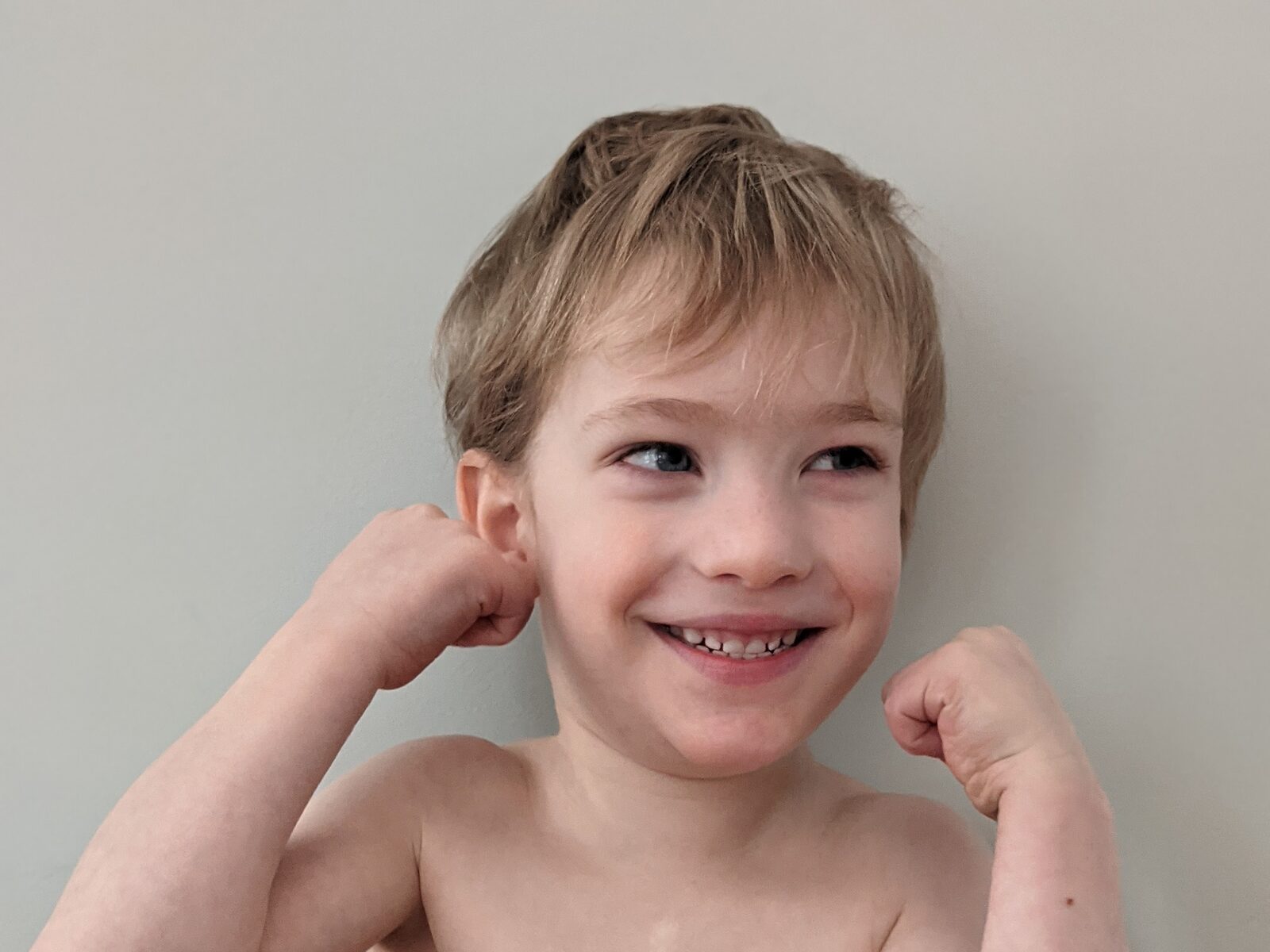
Today, that baby is thriving. He's almost 10 years old. He is smart, witty, athletic, opinionated and far more interested in sports, music and Minecraft than the medical history that once consumed every thought I had about him.
Over the last decade we've learned so much about congenital heart disease. We've learned that it's more common than we knew and treatable with the right care. We've also learned that a baby who begins life with a broken heart can grow into a strong, determined kid who will teach you to love harder and feel more awe than you ever thought possible.
Here are a few things I wish I could have told the terrified version of myself sitting in that doctor's office ten years ago.
The diagnosis is not the whole story
When you receive difficult news about your baby, it can feel as though their entire future has just been handed to you in a few frightening sentences, but it's not. A diagnosis tells you something important about your child's body. It does not tell you everything about who they will become.
I couldn't picture the curious, energetic kid my son would grow into. I couldn't imagine other parents being surprised when they learn he's had open heart surgery. At the time, I could barely see past the next appointment. I wish I'd known that his diagnosis would become one of the least interesting things about him.
You can be terrified and hopeful at the same time
For a long time, I wasn't sure how to balance the emotions. Either I felt hopeful and positive, or I was scared. In reality, my husband and I were a mix of all of it.
I could be completely in love with my new baby while also terrified of losing him. I could feel incredibly grateful for his medical team and still hate that we needed them. I could believe things would be okay and still feel overwhelmed by everything that could go wrong.
Many things are true at once. Fear and hope can occupy the same space. There's room for all of it.
You will have more support than you can imagine
At diagnosis, I felt like we had landed in a world where no one in our lives understood the language and we were alone.
We had no idea the community we'd build or how our existing one would adapt.
There were doctors and nurses who cared for us and our baby with extraordinary skill and compassion. There were other heart families who understood things that were difficult to explain to anyone else. There were friends and family members who showed up in practical ways, including the people who knew that sometimes support looks less like finding the perfect words and more like leaving food (lasagna in particular) on your doorstep.
I wish I'd known how many people would hold us up and give us space to figure it out.
You don't have to become the world's greatest parent because your child got sick
Once we knew our son was going to be okay, I made some fairly unrealistic promises to myself.
I was going to appreciate every second. I would never lose my patience. I would be the most grateful, present, calm mother imaginable because I knew how lucky I was to have him.
None of that lasted very long after bringing him home.
A child surviving something serious does not mean they stop being capable of driving you bananas or that a parent becomes superhuman.
Gratitude doesn't eliminate exhaustion. Perspective doesn't make you endlessly patient. You can be profoundly thankful for your child and still want them to put their shoes on after you have asked seventeen times.
You may look for a reason, even when there isn't one
For years, I wanted to blame myself for his diagnosis. I needed a reason.
Was it something I ate? Something I did during pregnancy? A trip we took?
I wanted an explanation because explanations can create the illusion of control. But sometimes there isn't one. I wish I could go back and tell myself that searching my pregnancy for a mistake wasn't going to change what happened. My energy was better spent learning what our baby needed and allowing myself to move forward. Making peace with that has taken time.
The hard parts can stay with you
Years later, I walked into a different hospital and smelled something familiar, disinfectant or plastic, whatever strange combination makes hospitals smell like they do, and suddenly I was back beside my baby in intensive care.
Memories don't always arrive when you invite them. Sometimes it's a hospital bracelet or a routine appointment. Sometimes it's sharing an article like this. Sometimes it's watching your child take a hard fall and feeling your attention immediately sharpen.
I didn't know that becoming a heart mom would mean carrying some of those experiences long after the immediate crisis had passed. Even when the medications and constant monitoring are in the past, parts of the experience stay with you.
Eventually, your baby becomes much bigger than their medical history
This might be the thing I most wish I could go back and tell myself.
I thought heart surgery would be his biggest story and that his heart condition would define him. Now it's just a footnote.
He has strong opinions. A sharp sense of humour. Friends. Sports. Hobbies. Things he loves and things he absolutely refuses to do. He pushes boundaries, makes us laugh and occasionally makes me wonder where I've led him astray and why his sarcasm is so spot on.
His scar is part of his story. So is his surgery. Neither defines him. Many people in our lives now don't even know this chapter.
I couldn't have understood that during the ultrasound when everything changed. I couldn't picture ten years into the future because I was trying to make it through the next ten minutes. If I could sit beside that pregnant and very unsure version of myself now, I wouldn't tell her not to worry. She had every right to be scared.
I would tell her that she doesn't know the whole story yet. There will be hospitals, waiting and fear. There will also be extraordinary people, relief, regular parenting problems and then a baby sister who proves that every child arrives with their own set of challenges.
And almost ten years later, the heart condition that once felt like the headline of our family's story is no longer our big story. It's one chapter in the life of a kid who has a lot more to say for himself.