
Understanding Lipoprotein(a) / Lp(a)
Your comprehensive guide to cardiovascular disease management
What is Lipoprotein(a) / Lp(a)?
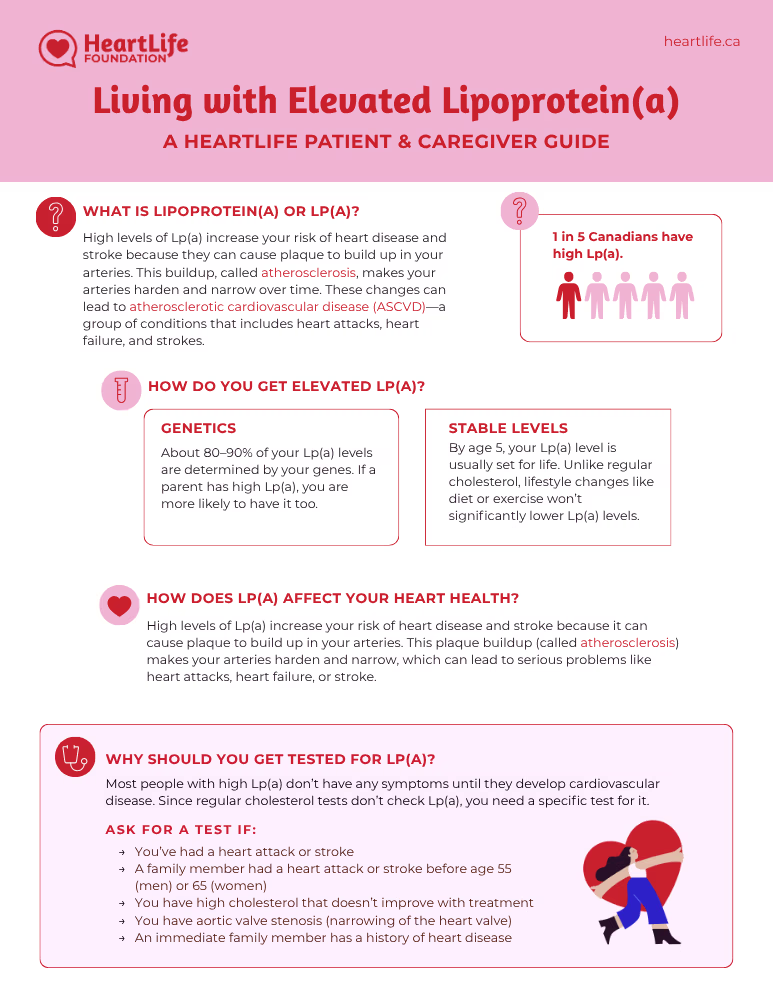
Lipoprotein(a), or Lp(a), is a type of fat particle in your blood. It carries cholesterol and other fats through your bloodstream. While some lipoproteins are considered "good" or "bad" cholesterol, Lp(a) is known as a genetic lipoprotein, which means its levels are mostly inherited from your family.


People worldwide have elevated Lp(a) levels, but many don't know it because there are no clear symptoms.
Canadians have high Lp(a)
Canadians are affected by ASCVD
How Does Lp(a) Affect Your Heart Health?
High levels of Lp(a) increase your risk of heart disease and stroke because it can cause plaque to build up in your arteries. This plaque buildup (called atherosclerosis) makes your arteries harden and narrow, which can lead to serious problems like heart attacks, heart failure, or stroke.
How Do You Get Elevated Lp(a)?
Genetics
About 80–90% of your Lp(a) levels are determined by your genes. If a parent has high Lp(a), you are more likely to have it too.
Stable Levels
By age 5, your Lp(a) level is usually set for life. Unlike regular cholesterol, lifestyle changes like diet or exercise won't significantly lower Lp(a) levels.
Why Should You Get Tested for Lp(a)?
Most people with high Lp(a) don't have any symptoms until they develop cardiovascular disease. Since regular cholesterol tests don't check Lp(a), you need a specific test for it.
Ask for a test if:
How is Lp(a) Tested?
Getting tested for Lp(a) is simple. Your healthcare provider will take a blood sample. You don't need to fast or prepare for this test, and it can usually be done during a routine blood test.
How to Reduce Your Cardiovascular Risk
Although you can't change your Lp(a) level with diet or exercise, there are ways to reduce your overall risk of heart disease:
Healthy Diet
Follow a diet rich in healthy fats (like nuts, fish, and olive oil), plenty of vegetables, and whole grains. Limit unhealthy fats and sugar.
Exercise Regularly
Aim for 30 minutes of moderate activity, like walking or biking, each day.
Quit Smoking
Smoking increases your risk of heart disease.
Manage Other Conditions
Work with your doctor to manage high cholesterol, high blood pressure, or diabetes.
New Treatments on the Horizon
Currently, there is no specific medicine approved to lower Lp(a) levels. However, several treatments are being researched in clinical trials. Your doctor can monitor your heart health and recommend ways to manage your risks in the meantime.
There is hope. With the right treatment and support you can manage Lp(a) and live the quality of life you deserve.
Take Action Now
If you think you may have high Lp(a) or have a family history of heart disease, talk to your doctor about getting tested. Early detection and lifestyle changes can help protect your heart health.
Check it outGet the Pamphlet
 Download Patient Resource Guide
Quick Reference for Professionals
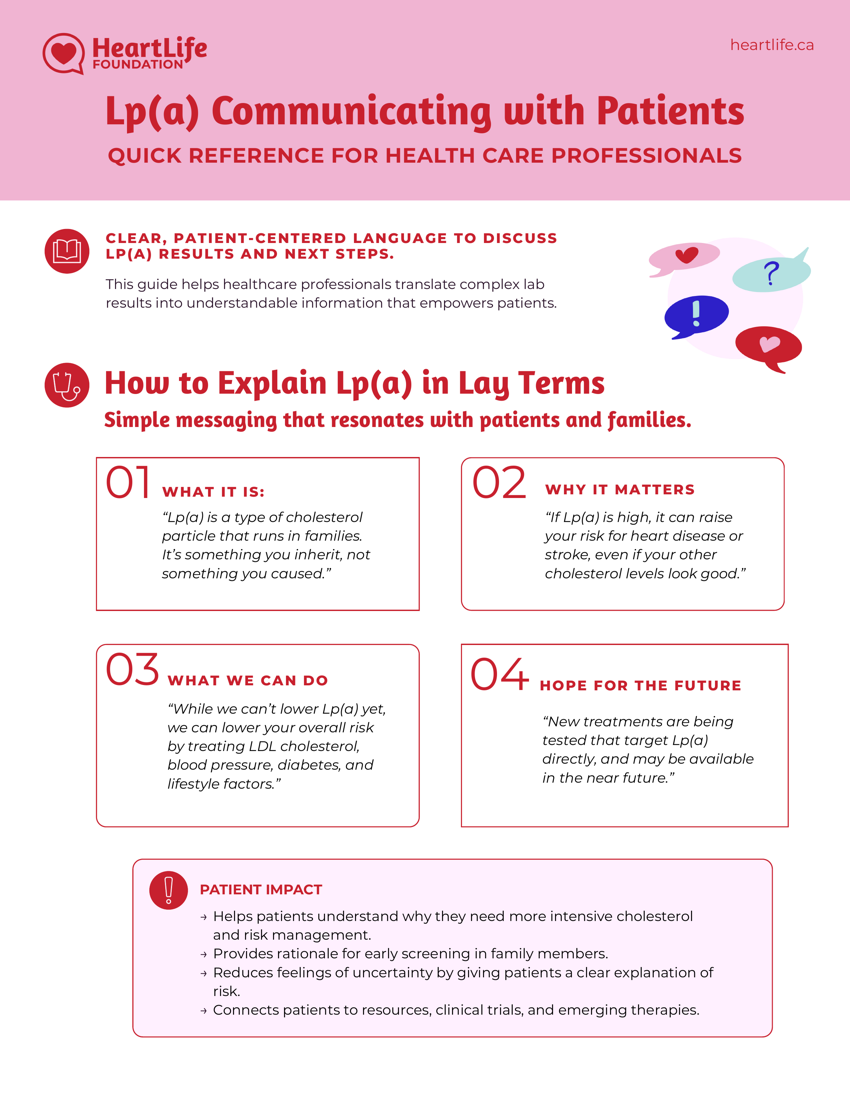
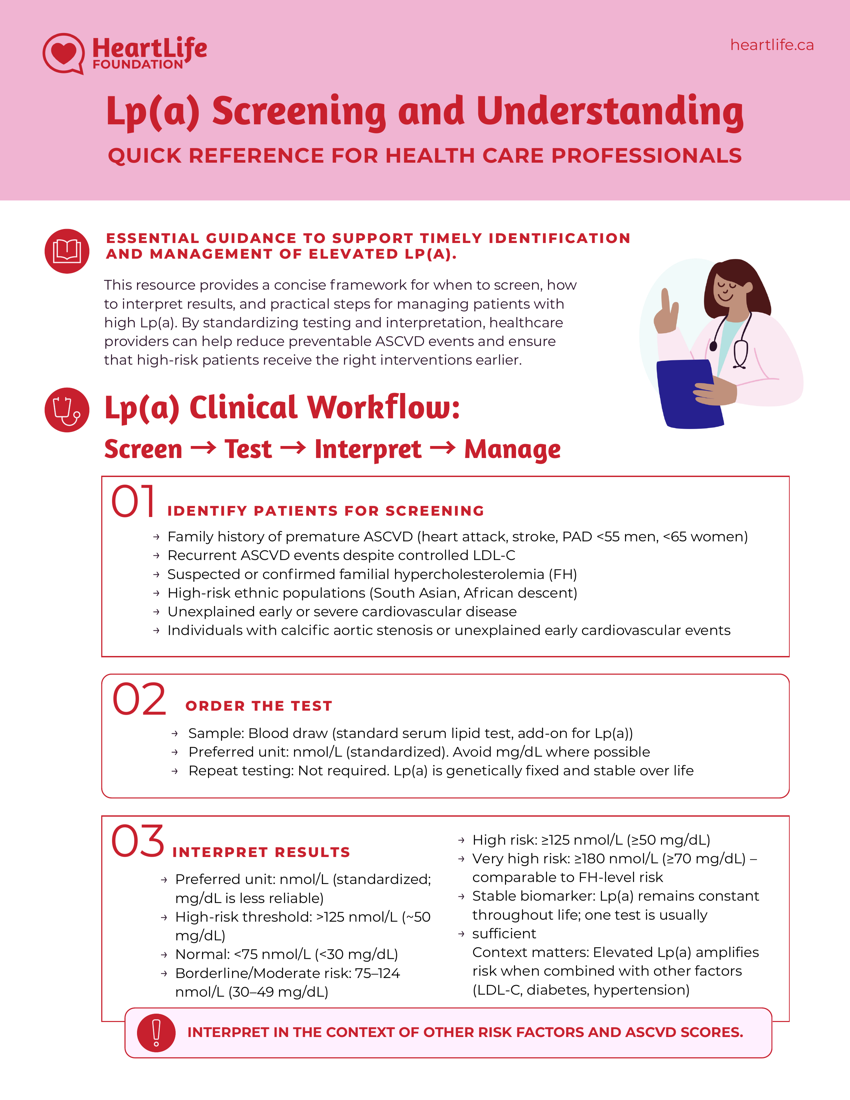
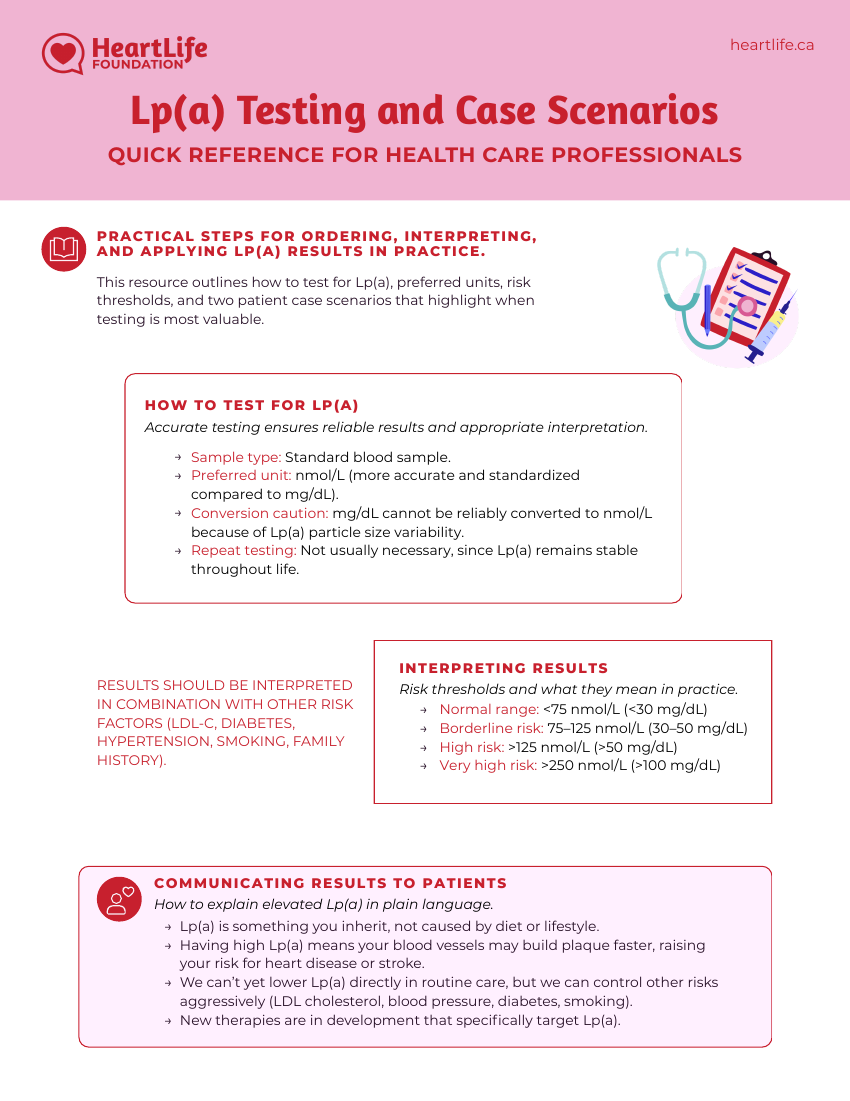
Are you a healthcare provider? Download the Lp(a) Quick Reference Guides that include screening workflows and case studies.
Our Support Group
The HeartLife Foundation is a patient-driven charity whose mission is to transform the quality of life for people living with heart disease by engaging, educating, and empowering a global community to create lasting solutions and build healthier lives. Join our Help for Hearts closed Facebook group to get support and share ideas.
Join Us & Subscribe
Have your voice heard. If you are a patient, family member or friend of someone with lived experience of heart disease or if you are a practitioner, allied health professional, not-for-profit or corporate partner, or simply a concerned citizen – Become a member – it's free.